
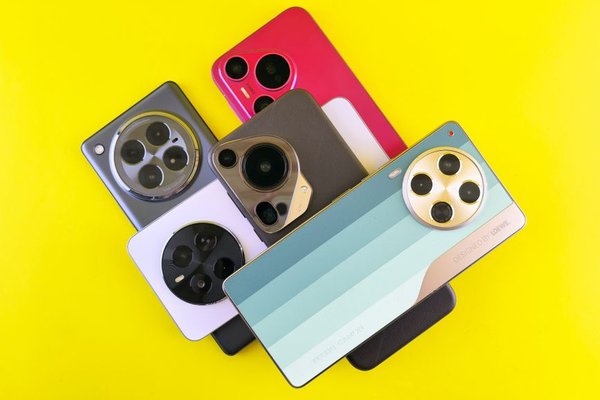
Smartphone cameras are now the main reason many people choose one flagship over another. In 2026, bigger sensors, brighter lenses, longer optical zoom ranges and smarter computational photography define the premium market. The best camera phones UK buyers can choose are not simply the models with the highest megapixel count; they are the phones that deliver dependable colour, detail and stabilisation across everyday scenes.
This guide compares the strongest options for photography, video and creator work. The ranking considers main-camera quality, zoom flexibility, low-light hardware, video tools and ease of use. Different photographers will prefer different processing styles, so the right choice depends on what you shoot most often.
What makes a great camera phone in 2026?
Sensor size and lens aperture matter because they affect how much light a camera captures. A large sensor with a bright lens generally performs better indoors and after sunset, although software processing is equally important. Modern phones combine exposures, identify faces, reduce noise and recover highlights.
Zoom specifications also need context. Headline figures such as 100x or 200x rely heavily on digital processing. Dedicated optical focal lengths and high-quality sensor crops are more useful in real life. Video creators should additionally compare stabilisation, frame rates, log recording and colour consistency when switching lenses.
The best camera phones UK buyers can choose in 2026
Samsung Galaxy S26 Ultra: best overall camera system
The Galaxy S26 Ultra is the most versatile all-round choice. Its rear system combines a 200MP main camera, a 50MP ultra-wide, a 50MP 5x telephoto and a separate 10MP 3x telephoto. That dual-telephoto arrangement is especially useful for travel, wildlife, events and portraits because it covers more practical focal lengths without depending entirely on digital cropping.
The main camera has a bright f/1.4 aperture, and Samsung offers 2x and 10x optical-quality options alongside its dedicated zoom lenses. Extreme Space Zoom settings are best treated as convenience tools, but the S26 Ultra remains a leading candidate for anyone searching for the best zoom phone camera. Strong stabilisation and improved low-light video further strengthen its position.
Apple iPhone 17 Pro Max: best for video and creators
The iPhone 17 Pro Max is the safest recommendation for creators who move between photography, video editing and social platforms. Apple uses three 48MP rear cameras: a main camera, an ultra-wide and a telephoto offering 4x optical zoom plus an 8x optical-quality option. The system delivers high-resolution capture across a wider range than previous generations.
Its key advantage is consistency. Exposure, autofocus, skin tones and lens transitions are designed to behave predictably when recording interviews, short-form clips or client content. ProRAW gives photographers editing freedom, while professional video formats and reliable stabilisation make this an excellent camera phone for content creators. It is appealing to anyone already using a Mac, iPad or Final Cut workflow.
Google Pixel 10 Pro XL: best point-and-shoot option
The Pixel 10 Pro XL suits people who want excellent images without adjusting many settings. Its triple rear system includes a 50MP main camera with a 1/1.3-inch sensor, a 48MP ultra-wide with autofocus and a 48MP 5x telephoto with optical stabilisation. It also provides optical-quality shooting steps at 0.5x, 1x, 2x, 5x and 10x.
Computational photography is the Pixel’s defining strength. Night Sight, Face Unblur, Real Tone, Best Take and Photo Unblur are designed to improve family photos, moving subjects and difficult lighting. The phone records 4K at up to 60 frames per second, with Video Boost supporting additional processing. For many users, this is the best phone camera 2026 offers for simple, repeatable results.
OPPO Find X9 Pro: best for telephoto portraits
The Find X9 Pro stands out because its telephoto camera is treated as a headline feature rather than a secondary sensor. It uses a 200MP telephoto with a large 1/1.56-inch sensor, f/2.1 aperture, optical stabilisation and a 70mm-equivalent focal length. That combination is well suited to portraits, stage photography, architectural details and compressed landscape shots.
The 50MP main camera uses a 1/1.28-inch sensor and bright f/1.5 aperture, accompanied by a 50MP ultra-wide and a dedicated colour sensor. OPPO also supports 4K recording at 120 frames per second with Dolby Vision and log recording. Its longest 120x setting is heavily software-assisted, but the large telephoto sensor still makes it one of the most interesting photography-focused Android phones sold in the UK.
HONOR Magic8 Pro: best for low-light telephoto shooting
The HONOR Magic8 Pro pairs a 50MP main camera with a large 1/1.3-inch sensor and f/1.6 aperture with a 200MP telephoto using a notably large 1/1.4-inch sensor. The telephoto offers 3.7x optical zoom and strong stabilisation, while a 50MP ultra-wide completes the system.
This hardware makes the Magic8 Pro appealing for evening portraits, indoor events and distant subjects in poor light. Its AI-assisted night and colour processing may look more processed than an iPhone or Pixel, but buyers who prioritise telephoto brightness and stabilisation should place it high on their shortlist.
Which camera phone should you buy?
Choose the Galaxy S26 Ultra for the broadest zoom range and most adaptable multi-camera setup. Pick the iPhone 17 Pro Max when video, workflow and lens consistency matter most. The Pixel 10 Pro XL is ideal for effortless everyday photography, while the OPPO Find X9 Pro and HONOR Magic8 Pro are specialist choices for telephoto and low-light work.
Storage matters too. High-resolution photos, RAW files and 4K video can fill a phone quickly. A 256GB model is a sensible starting point for frequent creators, while 512GB is more comfortable for people who record video regularly.
Frequently asked questions
What is the best camera phone in the UK for 2026?
The Samsung Galaxy S26 Ultra is the strongest overall choice because it combines a high-resolution main camera with dedicated 3x and 5x telephoto lenses. The iPhone 17 Pro Max may be better for video-first creators, while the Pixel 10 Pro XL is easier for point-and-shoot photography.
Which phone has the best zoom camera?
The Galaxy S26 Ultra offers the most flexible practical zoom system. The OPPO Find X9 Pro and HONOR Magic8 Pro are also excellent because they use high-resolution, large telephoto sensors.
Are more megapixels always better?
No. Megapixels affect resolution, but sensor size, aperture, lens quality, stabilisation and processing are equally important. A lower-resolution camera can produce a better image when it captures more light and processes colour more naturally.
Which camera phone is best for social media creators?
The iPhone 17 Pro Max is the most complete creator option because of its dependable video, stabilisation, editing formats and ecosystem integration. Android creators who want advanced zoom or 4K 120fps recording should consider the Galaxy S26 Ultra or OPPO Find X9 Pro.
Conclusion
The best camera phones UK shoppers can buy in 2026 are increasingly specialised. Samsung leads for all-round flexibility, Apple remains the strongest creator-focused video choice, Google simplifies computational photography, and OPPO and HONOR push telephoto hardware further. Focus on the lenses and shooting situations you will genuinely use rather than the biggest number on the specification sheet, and you will choose a phone that remains useful after the launch excitement fades.